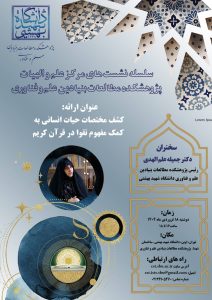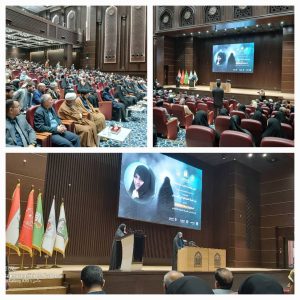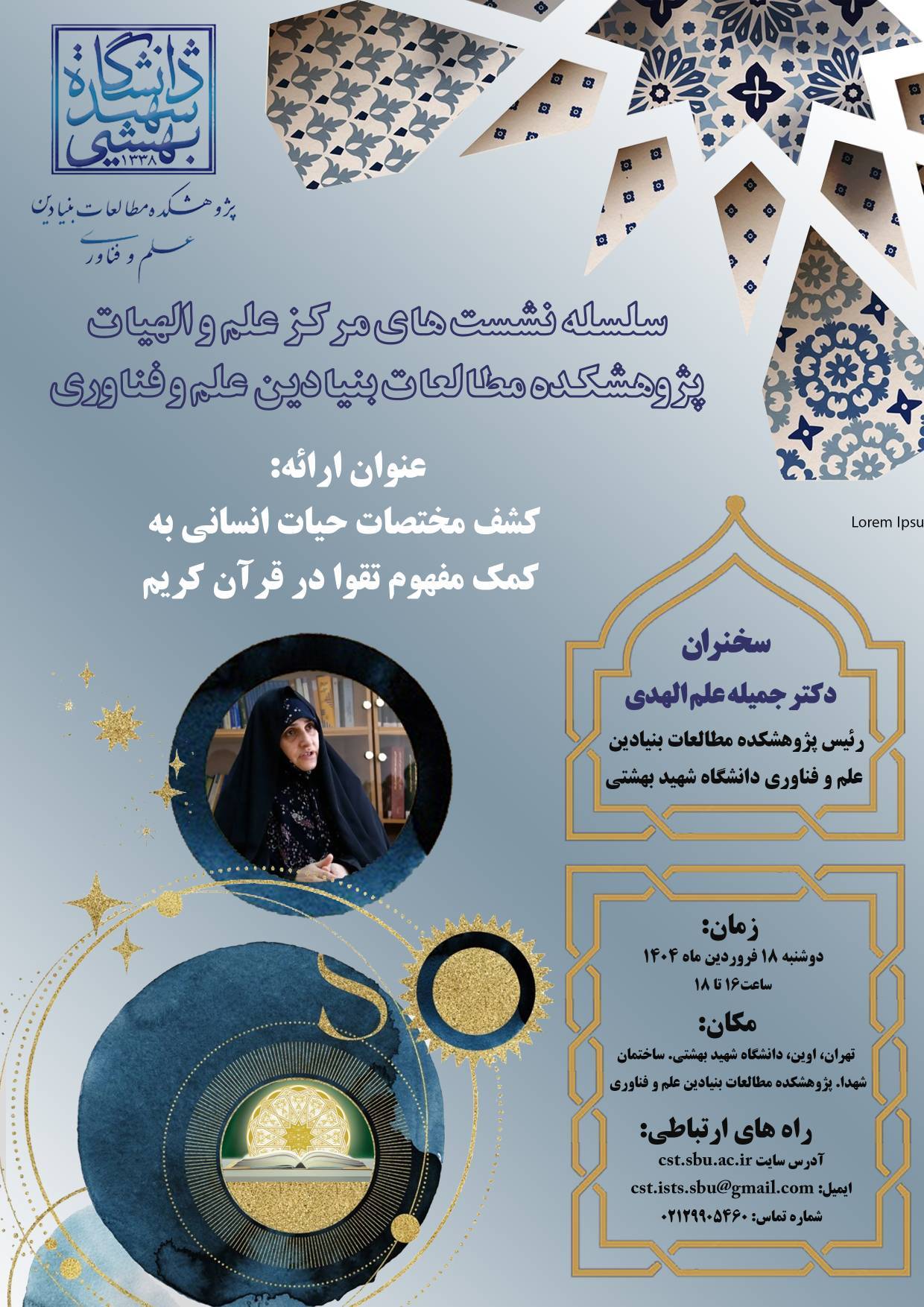
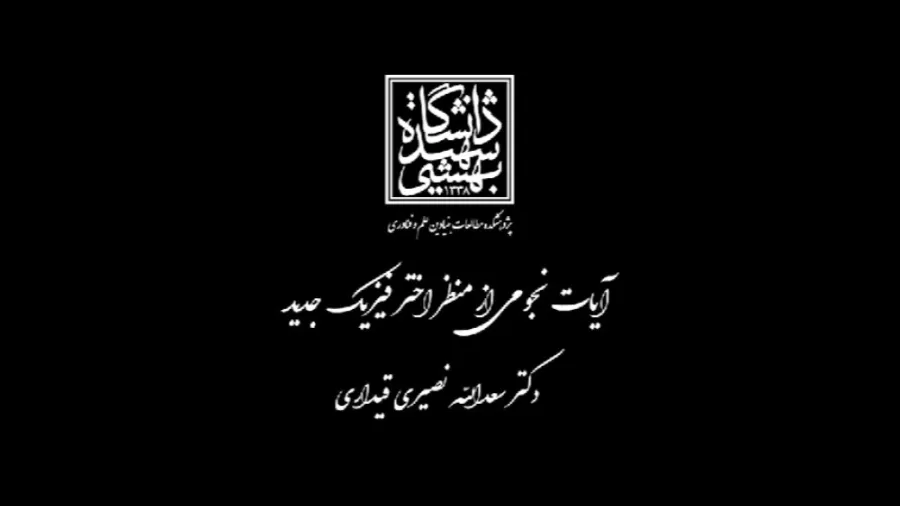
On March 16, 2022, a lecture series on the intersection of science and theology was held at the Institute for Fundamental Studies in Science and Technology at Shahid Beheshti University. Dr. Saadallah Nasiri Qeydari, a faculty member of the Physics Department at Shahid Beheshti University, delivered a lecture on “Astronomical Verses from the Perspective of Modern Astrophysics.”
Initially, Dr. Nasiri Qeydari presented his inquiry regarding whether there has been any discrepancy between astronomical verses and the evolution of astronomical science throughout history. He then proceeded to delineate the history of the evolution of astronomical science, categorizing it into three periods:
- The Earth-Centric Period, from ancient times until the late 16th century (during which the Earth was believed to be the center of the universe).
- The Galactic Period, beginning in the early 17th century, wherein the universe was perceived to consist of galaxies, notably the Milky Way.
- The Cosmological Period (spanning hundreds of thousands of years of observable galactic universe), encompassing the era in which the observable universe was formed.
Furthermore, by emphasizing documented evidence from Quranic verses, it was asserted that despite the changes and advancements in scientific knowledge, no discrepancy has emerged in any of the verses, all of which testify to this fact.
In verses 1 to 5 of Surah Al-Alaq, the Quran underscores the importance of reading and knowledge, affirming Prophet Muhammad’s mission as an educational and enlightening one.
Similarly, referencing verse 21 of Surah Al-Anbiya, Dr. Nasiri Qeydari highlighted the concept of the universe being rolled up like a scroll, metaphorically suggesting a two-dimensional model of the universe. This verse underscores the dynamic nature of the universe, akin to the force of a spring, a concept mirrored in the physical world.
In addition, verse 16 of Surah Nuh metaphorically likens the sun to a lamp, emphasizing its role in converting energy, which aligns with modern understanding that the sun’s energy is atomic.
Lastly, verse 5 of Surah Yunus elucidates the lunar phases, implying the notion of time reckoning and numeration, which corresponds to astronomical observations.
In conclusion, Dr. Nasiri Qeydari asserted that based on modern science and Quranic evidence, there exists no contradiction between Quranic verses and the fields of astrophysics and cosmology. These phenomena serve as evidence of the greatness of the one and only Creator.